Module 5 — Lash Mapping Framework
Designing balanced, customized lash sets.
Lash mapping is planning the length, curl, and placement of extensions across the lash line before application.
A structured map considers:
- Eye shape
- Natural lash density and growth direction
- Desired style (natural, open eye, cat eye, etc.)
Part 1 — The Mapping Decision Tree
Step 1 — Evaluate Natural Lash Health:
- Look at lash density, thickness, growth direction, weak or sparse areas
- If fragile → shorter and lighter
- If dense and strong → more dramatic maps may be possible
Step 2 — Identify Eye Shape:
- Almond, round, hooded, monolid, deep-set, protruding, downturned, upturned, close-set, wide-set
- Each benefits from different placements
Step 3 — Identify Client Look Preference:
- Natural, lifted, dramatic, elongated
- Balance with natural lash safety
Step 4 — Choose the Lash Map once you evaluate lash health, eye shape, and desired effect.
.svg)
Part 2 — Eye Shape Mapping Grid
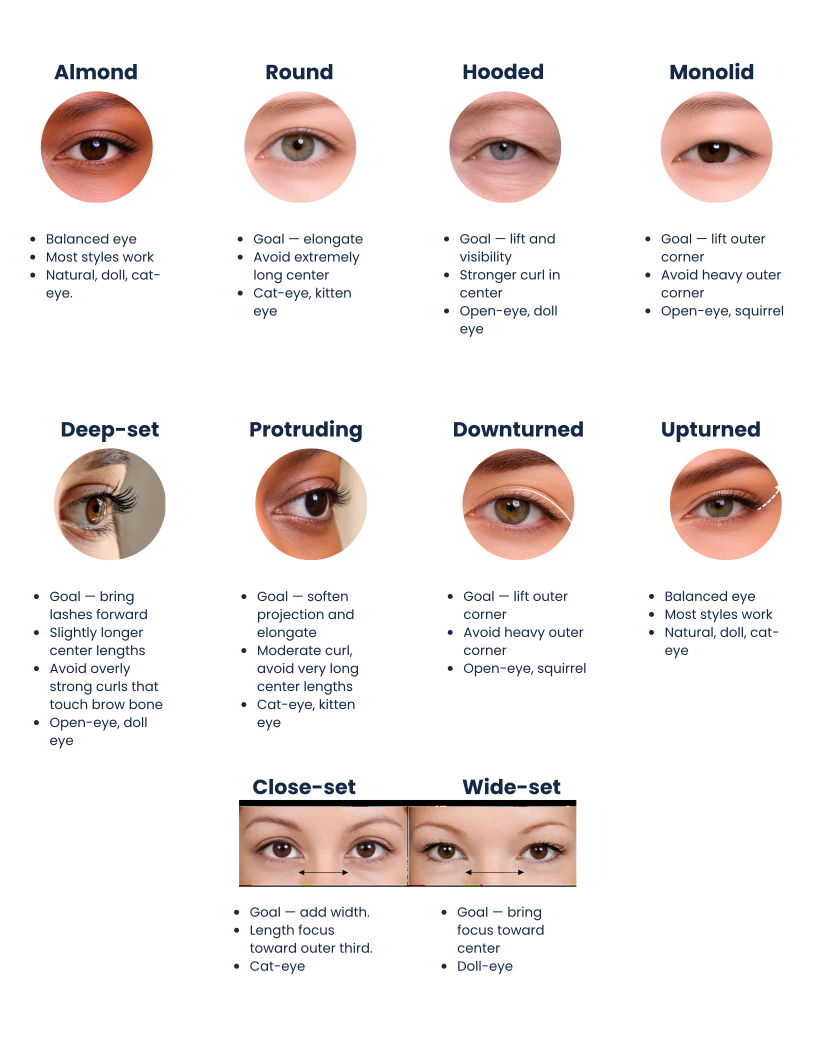
- Almond eyes: Balanced; most styles work. Natural, doll, cat-eye.
- Round eyes: Goal — elongate. Cat-eye, kitten eye. Avoid extremely long center.
- Hooded eyes: Goal — lift and visibility. Open-eye, doll eye, stronger curl in center.
- Downturned eyes: Goal — lift outer corner. Open-eye, squirrel map; avoid heavy outer corner.
- Close-set eyes: Goal — add width. Cat-eye; length focus toward outer third.
- Wide-set eyes: Goal — bring focus toward center. Doll-eye.
Part 3 — Core Lash Mapping Templates
Example length progressions (in mm):
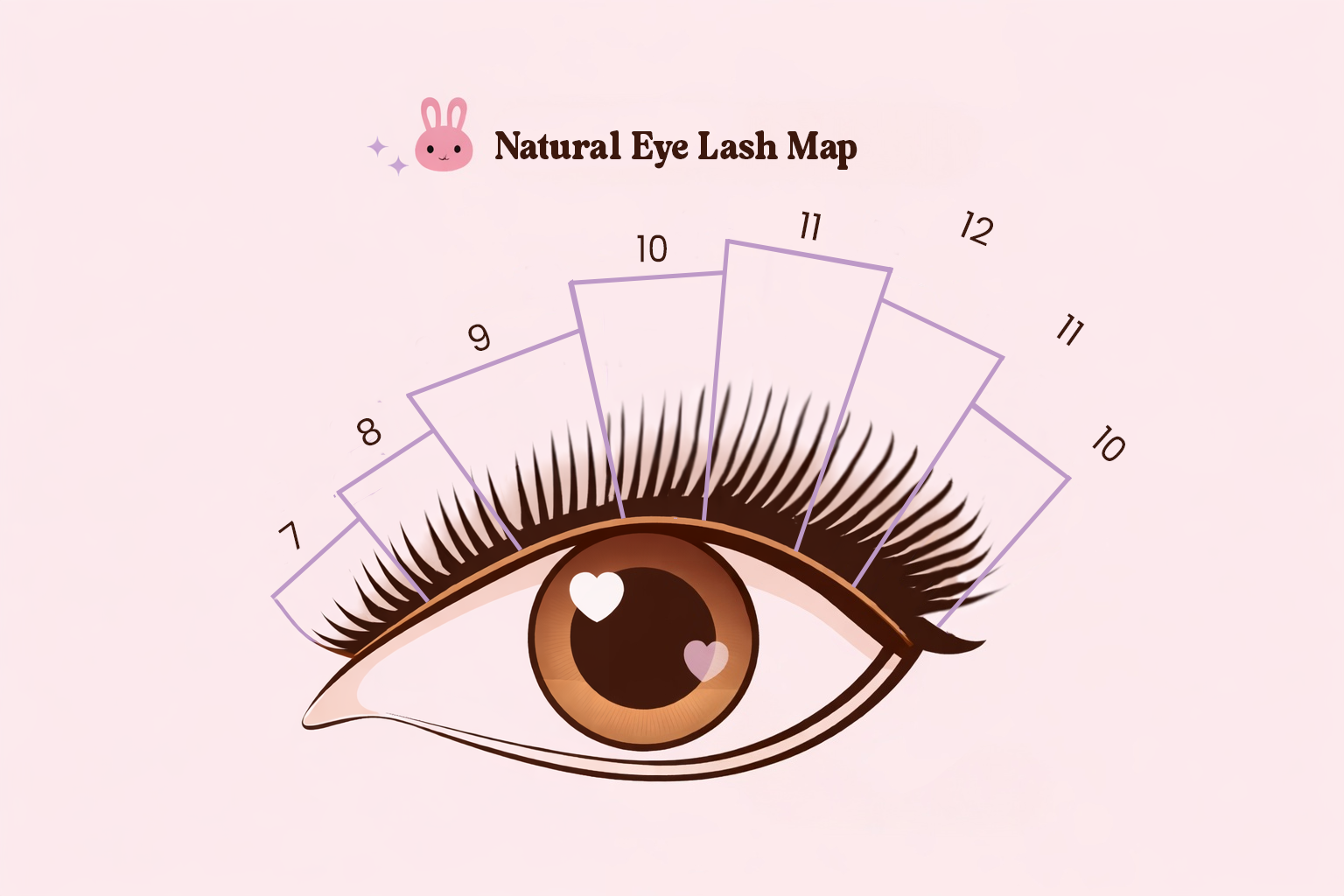
- 1 — Natural Eye: 7 — 8 — 9 — 10 — 11 — 12 — 11 — 10. Best for beginners and everyday looks.
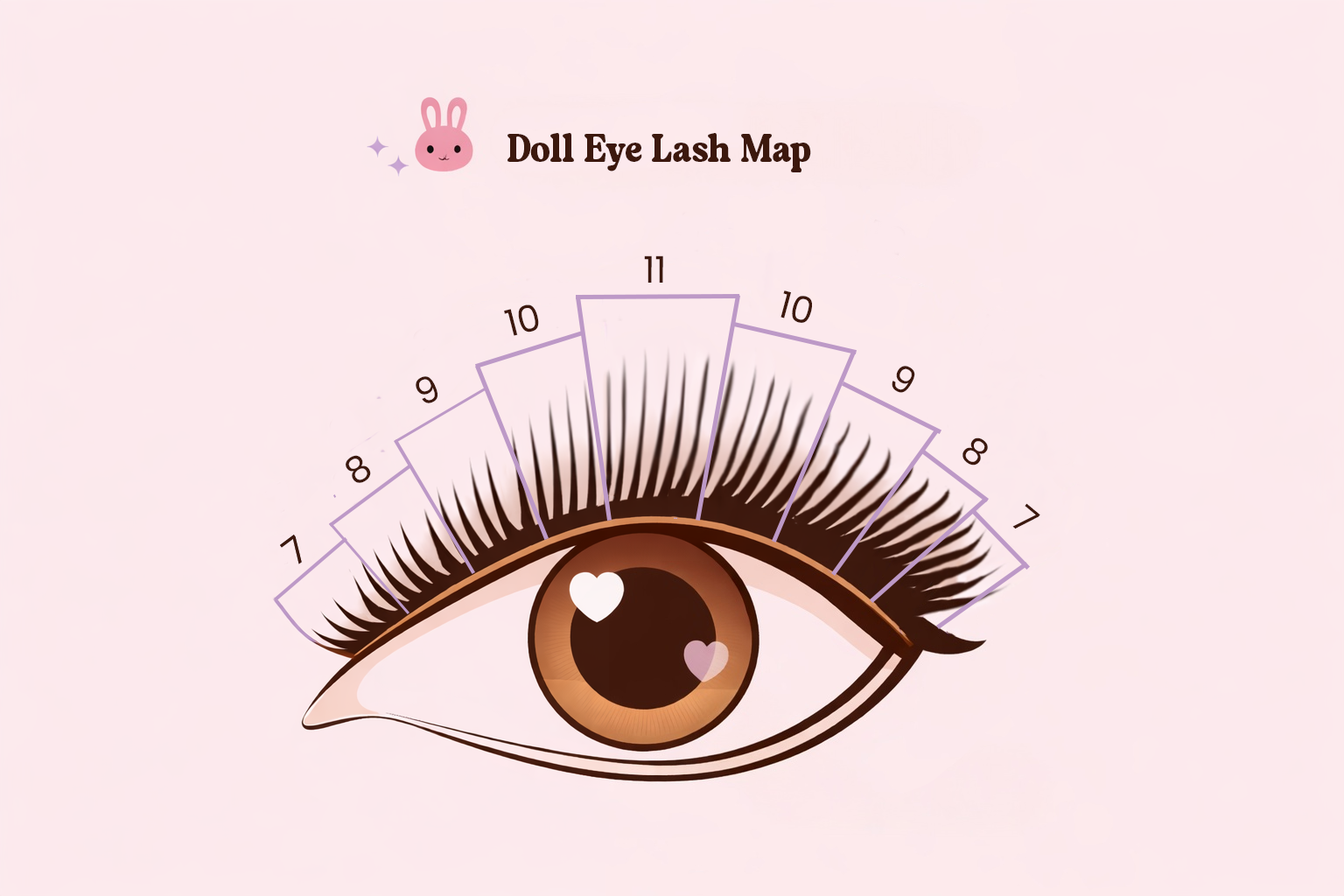
- 2 — Doll Eye: 7 — 8 — 9 — 10 — 11 — 10 — 9 — 8 — 7. Longest in center; wide, open-eye effect.
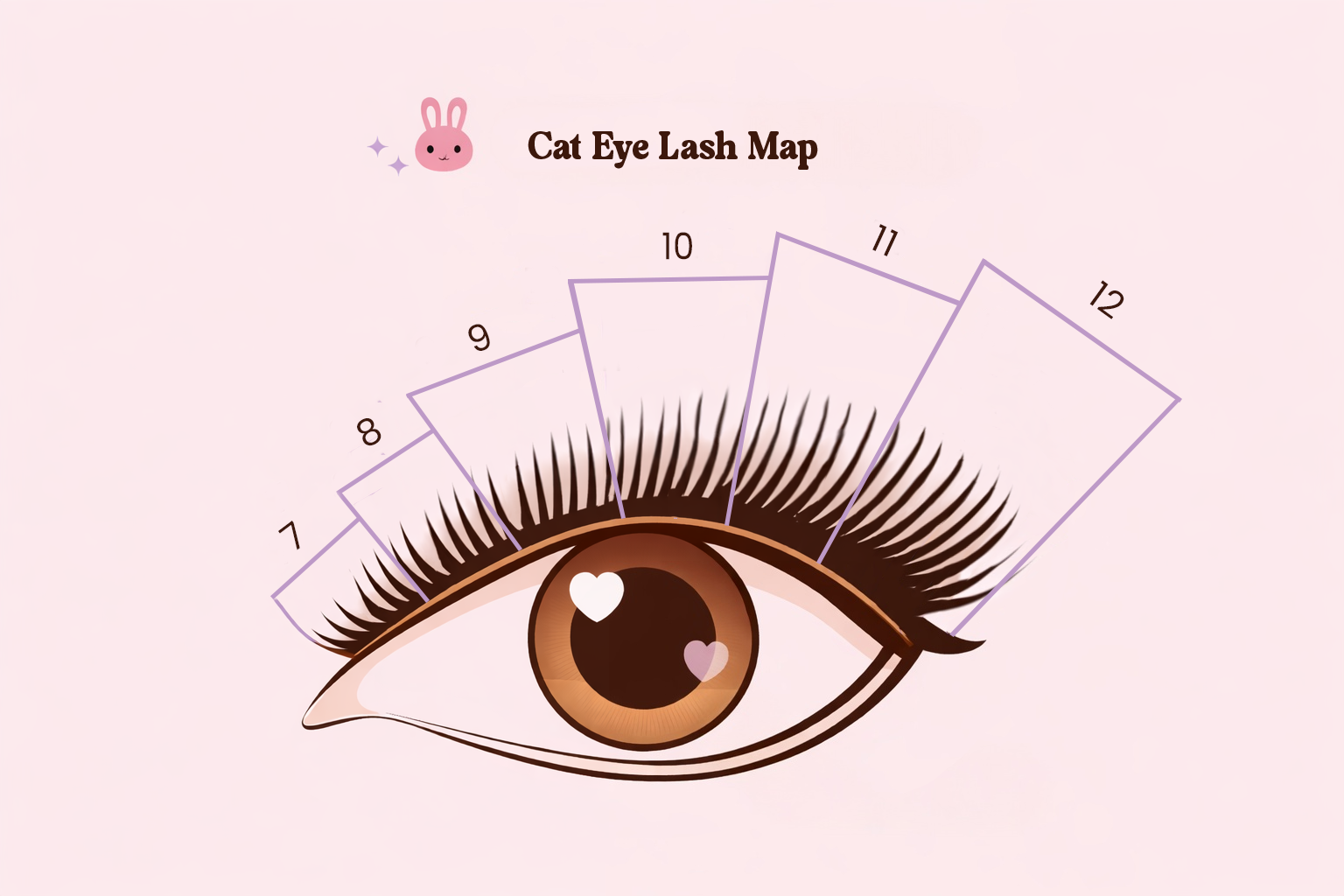
- 3 — Cat Eye: 7 — 8 — 9 — 10 — 11 — 12. Lengths increase toward outer corner; elongated.
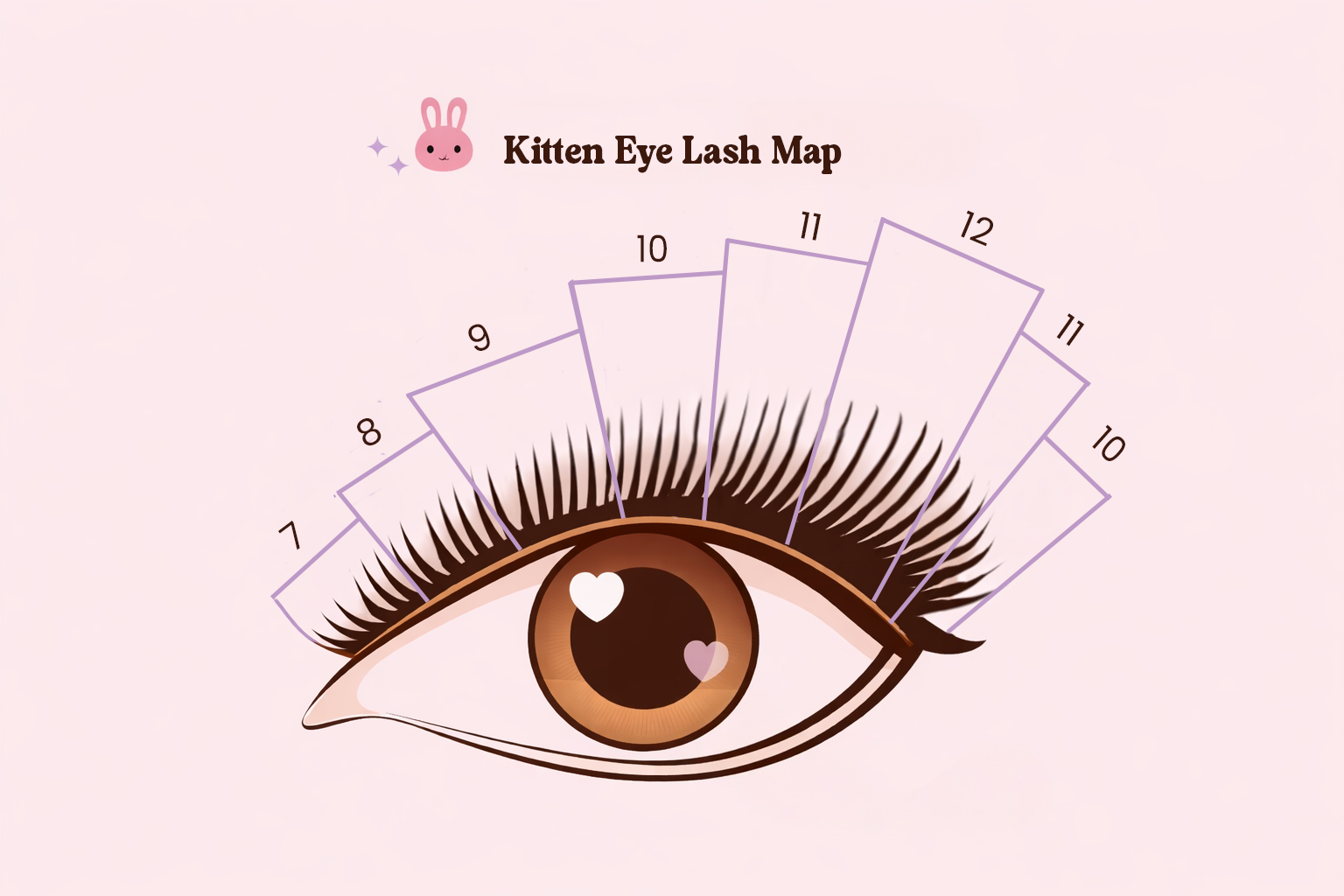
- 4 — Kitten Eye: 7 — 8 — 9 — 10 — 11 — 12 — 11 — 10. Similar to cat but softened; prevents outer drooping.
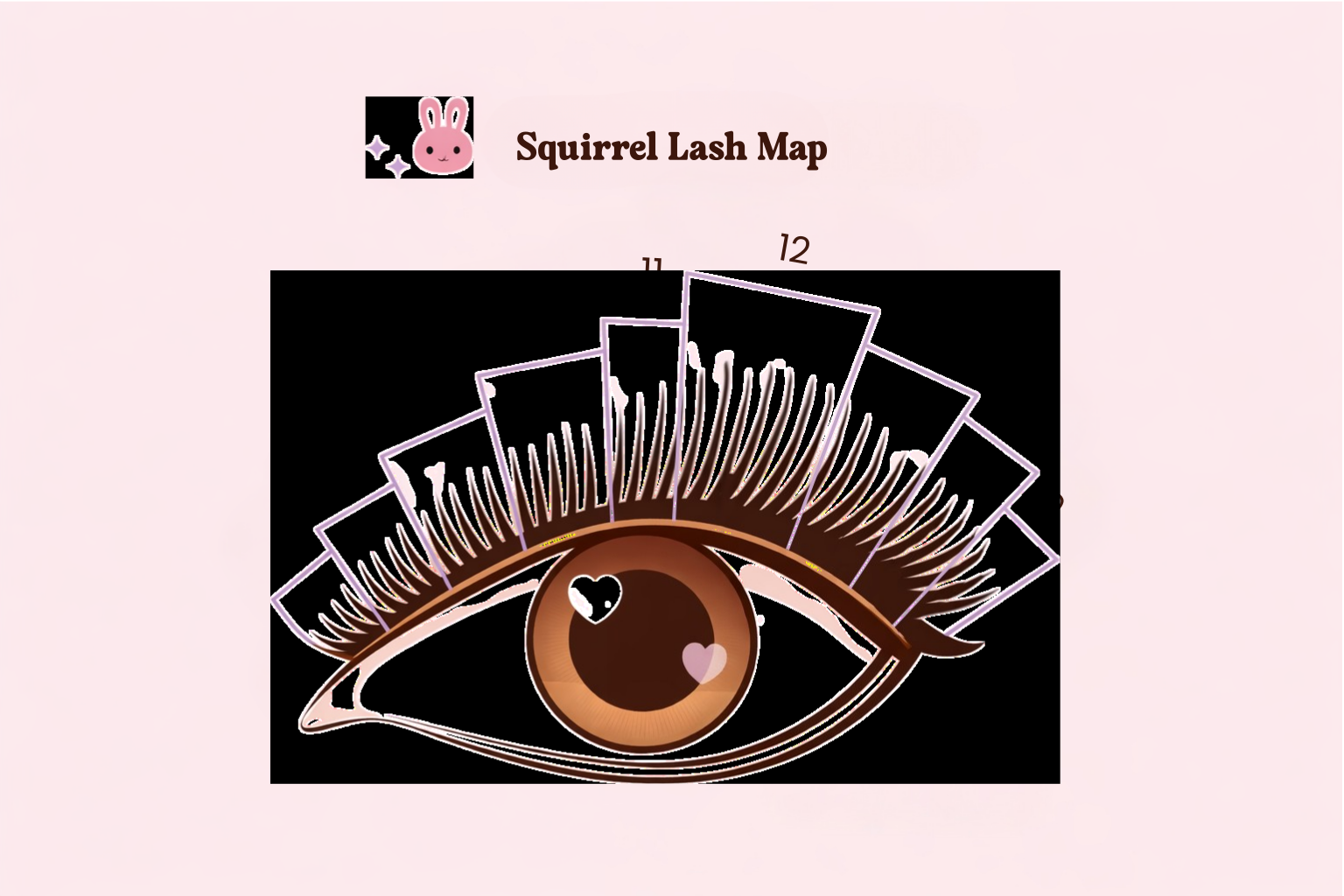
- 5 — Squirrel: 7 — 8 — 9 — 11 — 12 — 11 — 10 — 9. Longest slightly past center; great for downturned eyes.
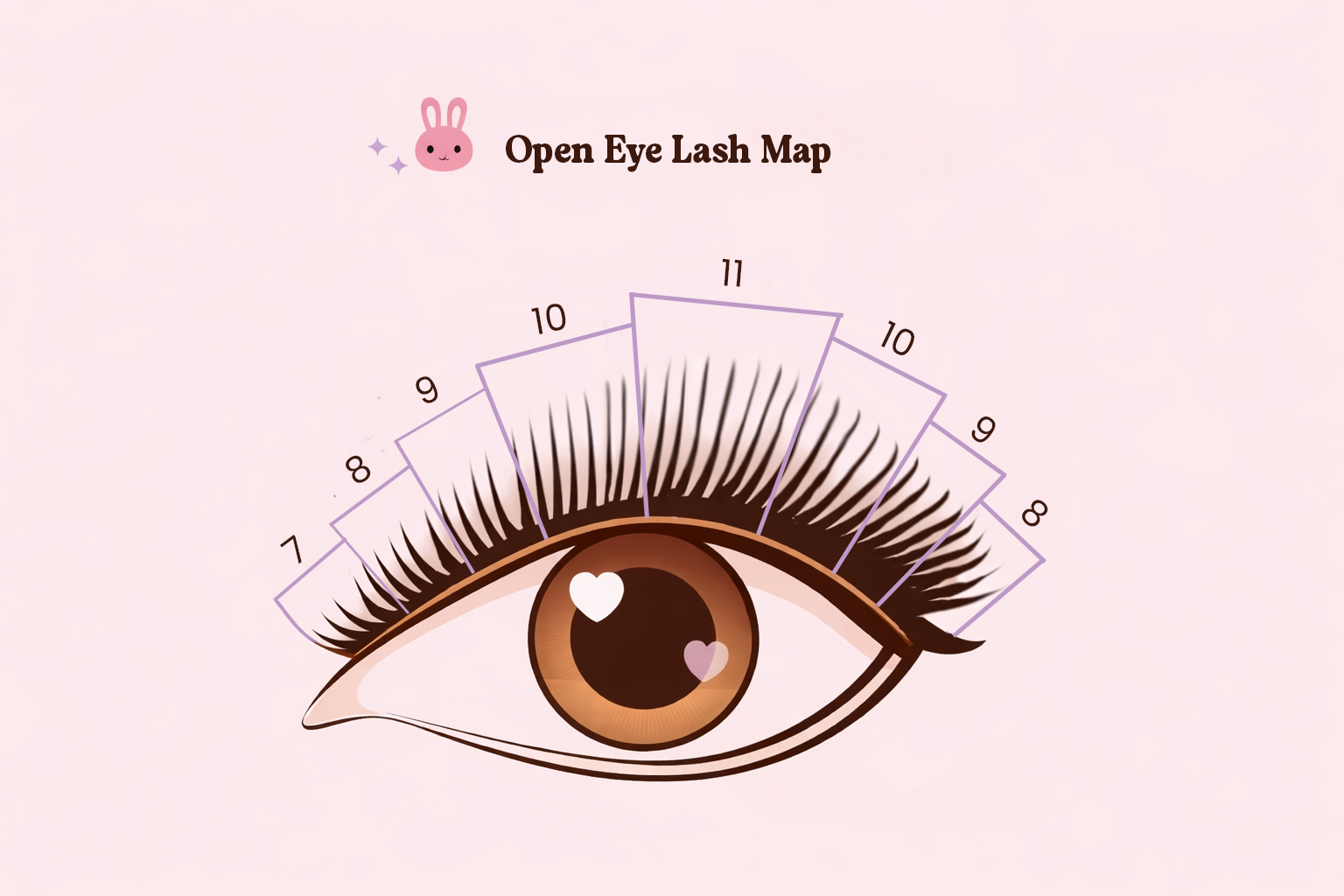
- 6 — Open Eye: 7 — 8 — 9 — 10 — 11 — 10 — 9 — 8. Longest across center zone; creates lift for hooded eyes.
Part 4 — Downloadable Mapping Guide
Use the Assessment Form to record each client's natural lashes, eye shape, look preference, map selected, and lengths and curl selected. This record informs the lash tech of what to do in future fills and lash sets.
Why mapping matters:
- Without a map, sets can become uneven, overloaded, asymmetrical
- Mapping ensures consistency, symmetry, efficient application, and professional results
- Great lash artists analyze the eye, choose the design, map before starting, and adjust based on natural lash strength