Module 2 — Lash Extension & Adhesive Principles
Understanding materials, weight, and chemistry for safe classic lashing.
1. Lash Extension Fundamentals
What Are Lash Extensions Made Of?
Modern lash extensions are typically synthetic PBT (Polybutylene Terephthalate):
- Heat-molded to hold curl
- Lightweight
- Consistent shape
- Hypoallergenic
Types:
- Faux Mink
- Softer, matte, flexible
- Faux Silk
- Slightly shinier, firmer
- Cashmere
- Softer, lighter, matte
- Flat/ellipse base = larger surface contact, better bonding, often improved retention
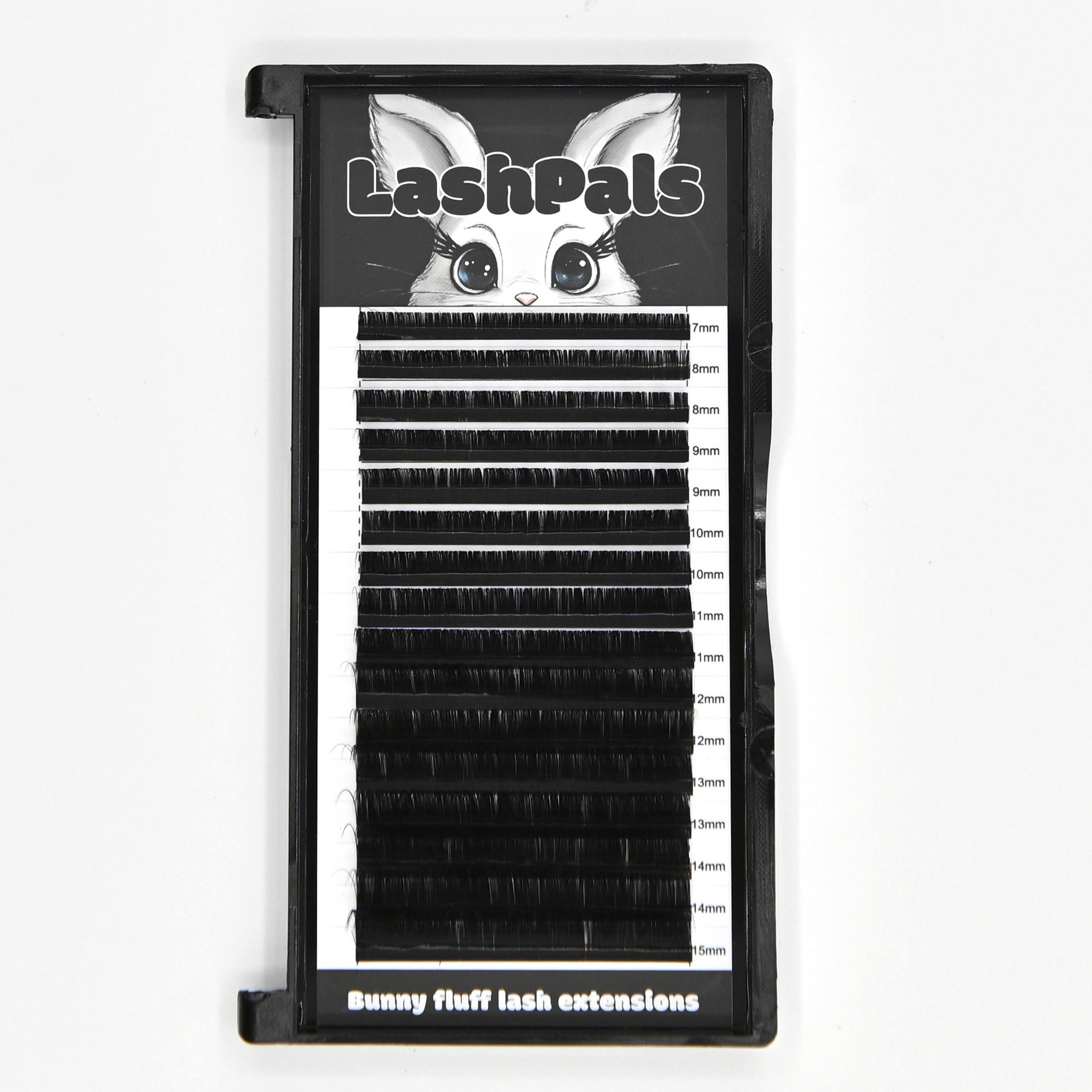
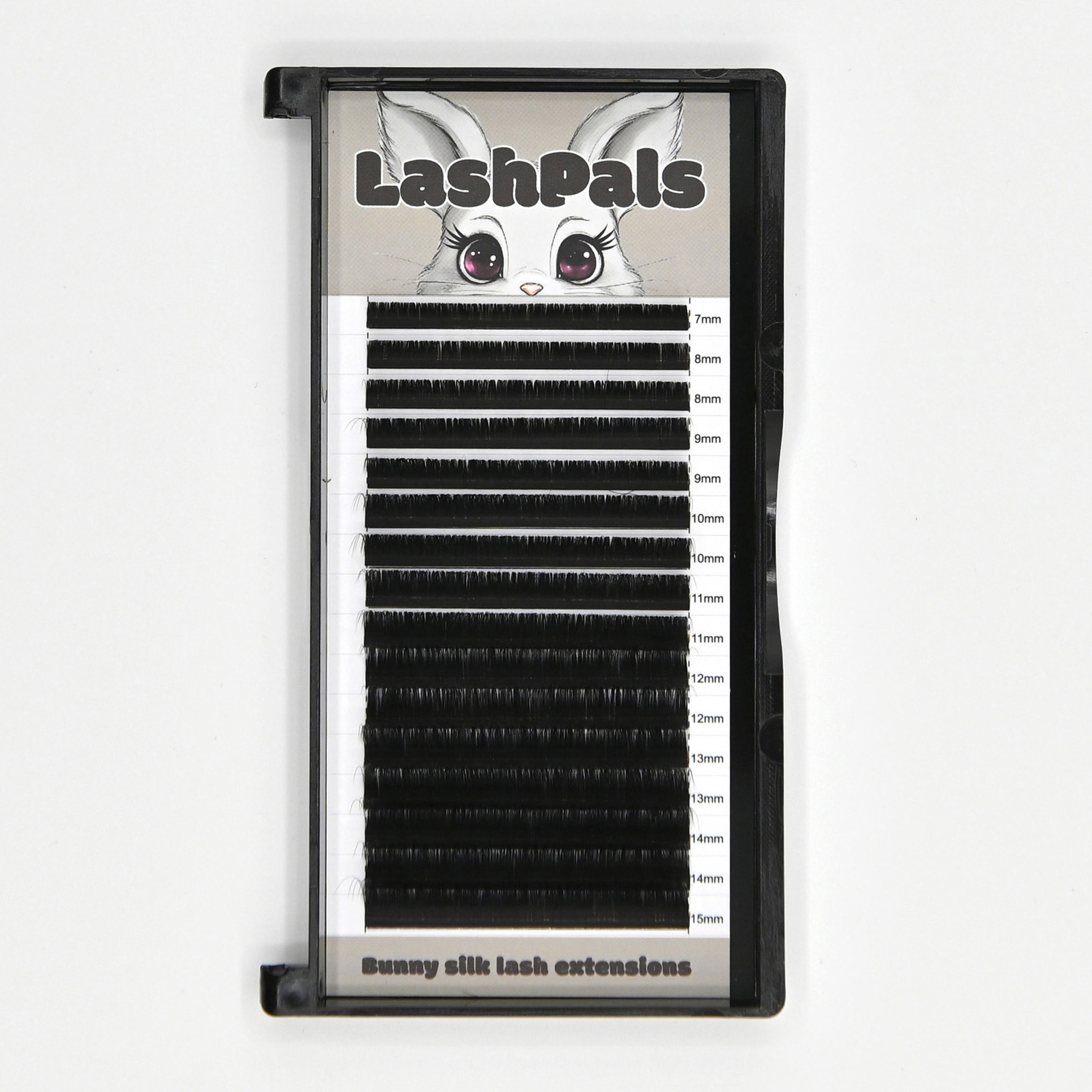
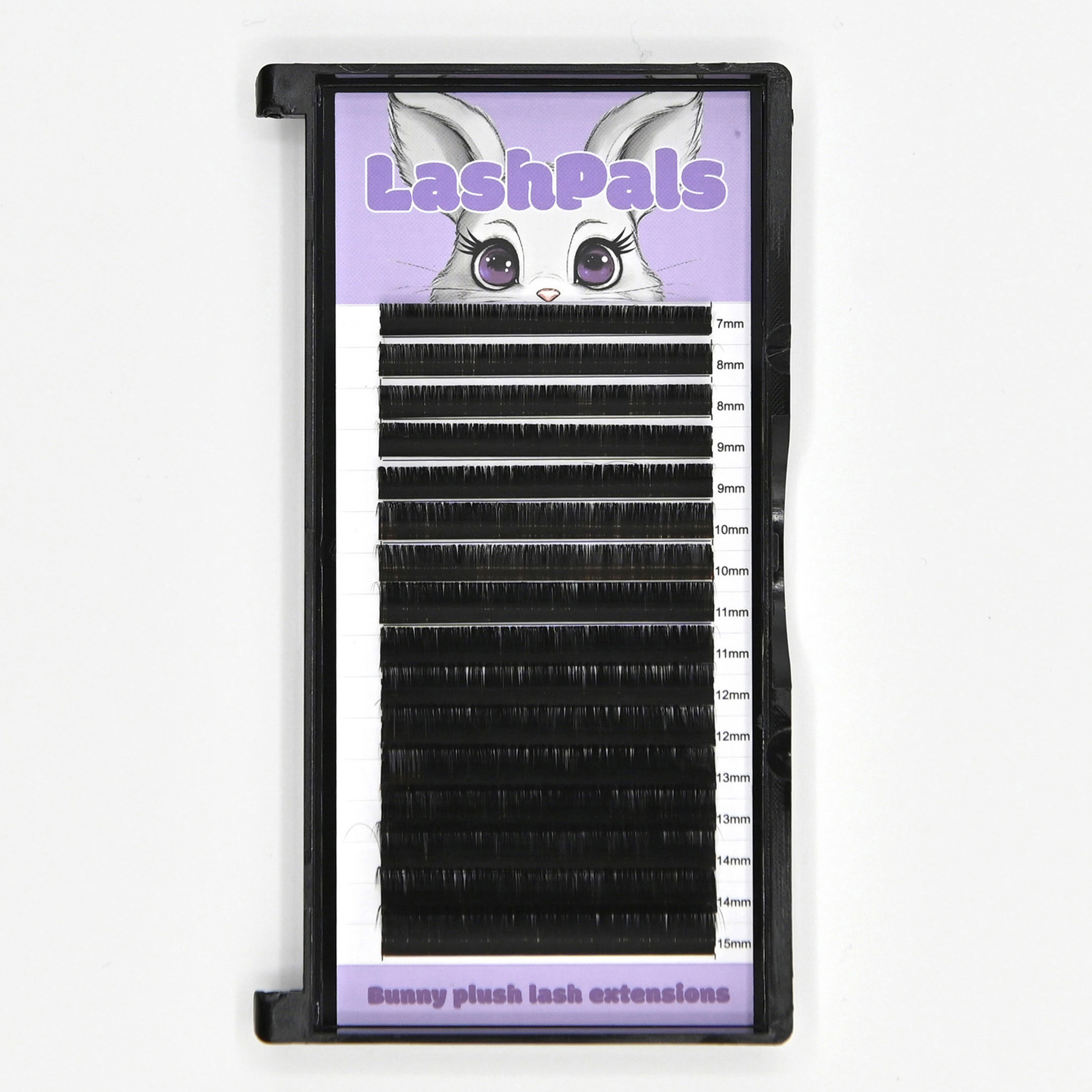
True animal mink is rarely used in professional environments.
View LashPals lash trays here.
2. Diameter & Weight Rules
Common classic diameters:
- 0.10 mm, 0.12 mm, 0.15 mm, 0.18 mm, 0.20 mm
- Smaller number = lighter weight
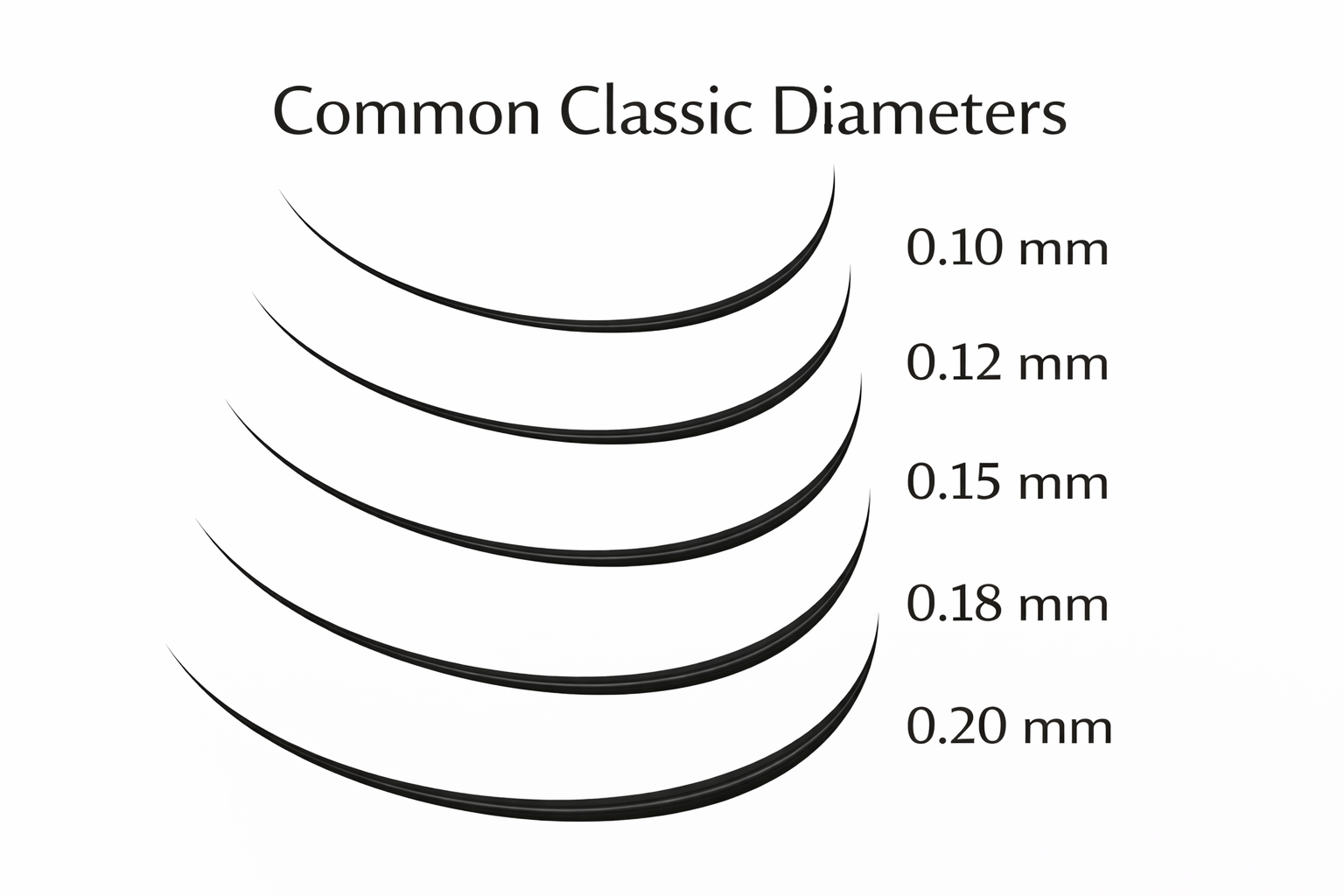
Classic weight guidelines:
- 0.10 mm → very safe
- 0.12 mm → ideal for softer classics
- 0.15 mm → industry standard
- 0.18 mm → only for strong natural lashes
- 0.20 mm → rarely recommended
When in doubt → go lighter.
Length safety: Do not exceed 2–3 mm longer than the natural lash length. Too long = leverage stress = early fallout.
3. Good Quality vs. Poor Quality Extensions
High-quality:
- Consistent curl, uniform thickness, tapered tips
- Matte finish, flexible fiber, stable curl retention
Poor quality signs:
- Uneven curl, blunt or thick tips, excessive shine
- Inconsistent lengths, stiff or brittle fibers, poor strip adhesion
LashPals supplies high-quality, premium lash extension trays at affordable prices.
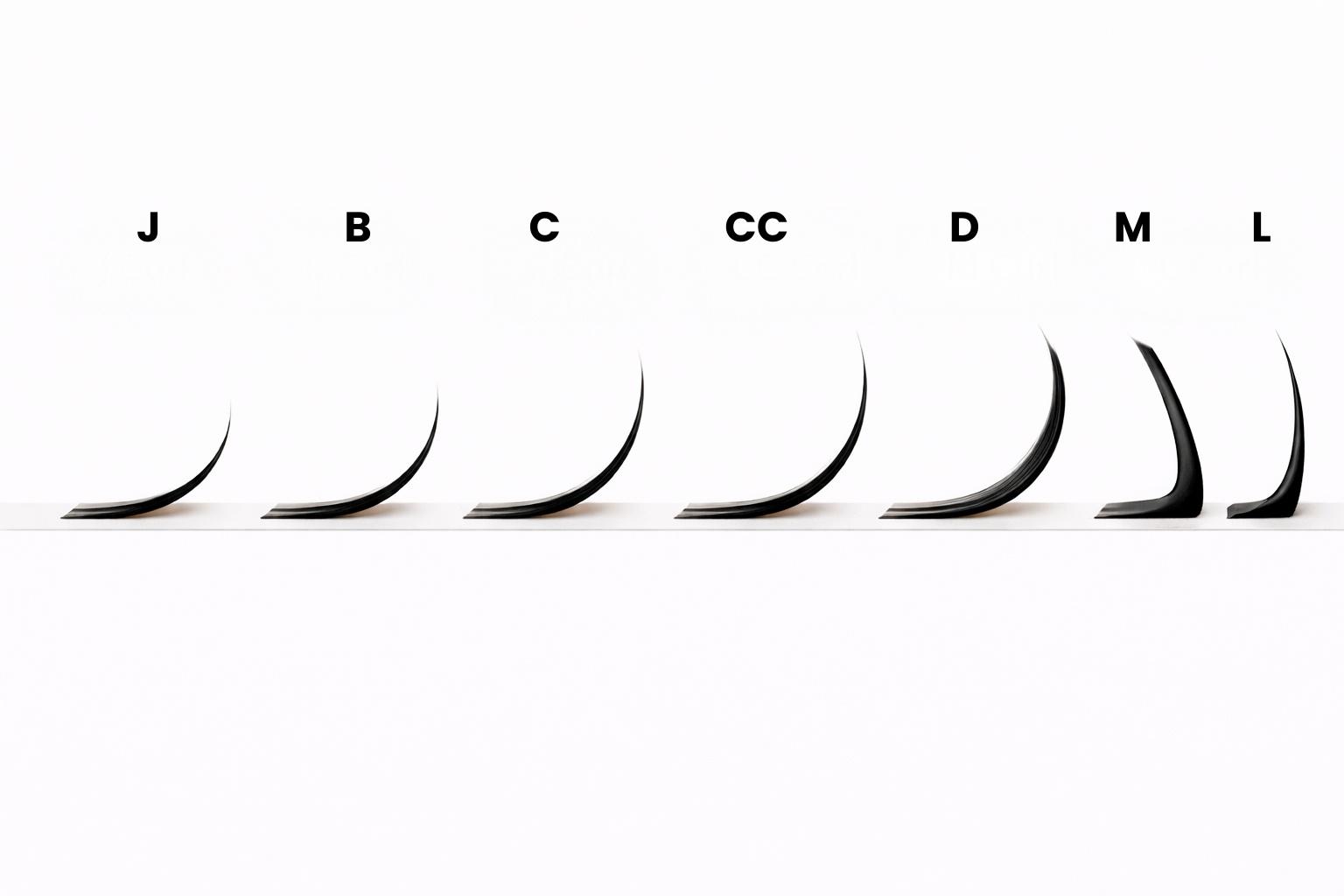
4. Curl Types & Eye Styling Basics
- J Curl — Very natural, minimal lift; rarely used today.
- B Curl — Slight lift, natural mascara effect.
- C Curl — Soft open-eye look, beginner-friendly.
- CC Curl — Most popular; slightly stronger than C; great for straight lashes.
- D Curl — Dramatic lift; great for downward-facing natural lashes.
- L & M Curls — Flat base, strong lift; good for hooded eyes.
If unsure → start with C or CC. Overly dramatic curls on weak lashes can cause lifting or twisting.
5. Adhesive Principles
Primary ingredient: Cyanoacrylate (creates the bond).
Other ingredients may include:
- Carbon black
- Stabilizers
- Thickeners
Adhesive Chemistry Basics
Cyanoacrylate cures when it reacts with moisture in the air (humidity matters).
Ideal range (varies by brand):
- 40–60% humidity, 20–23°C
- LashPals Bear adhesives work in an extremely wide range
Humidity effects:
- Low humidity → glue cures too slowly, poor retention
- High humidity → cures too fast, weak brittle bonds
Tips:
- Use a hygrometer
- Beginners should use slower-curing adhesive (e.g. 1–2 second)
Common mistakes:
- Too much glue
- Not replacing drops
- Poor isolation
- Poor humidity control
- Attaching to skin
Retention problems are usually technique or environment — not "bad glue."
Safety: Fumes can irritate eyes.
- Work in ventilated room
- Replace glue drops every 15–20 min
- Use Lash Bonder after service (e.g. LashPals Purrfect Bonder)
View LashPals Purrfect Bonder here.